
Gochujang Salmon Ramen
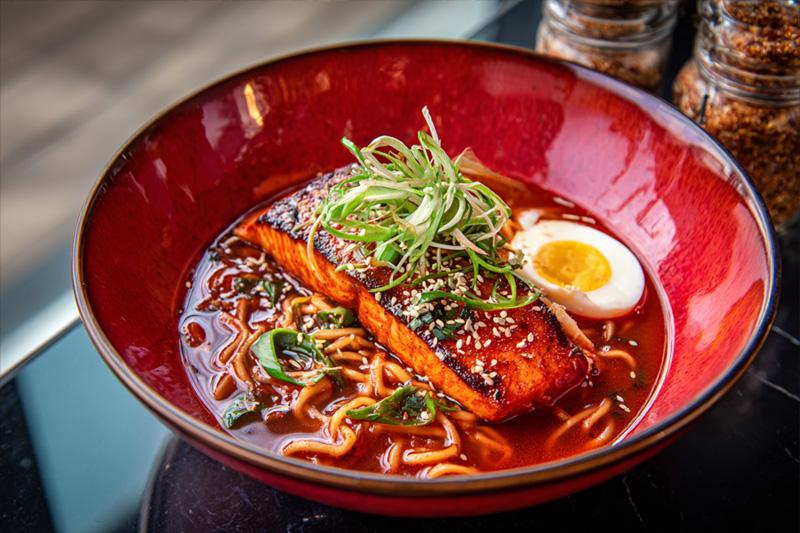
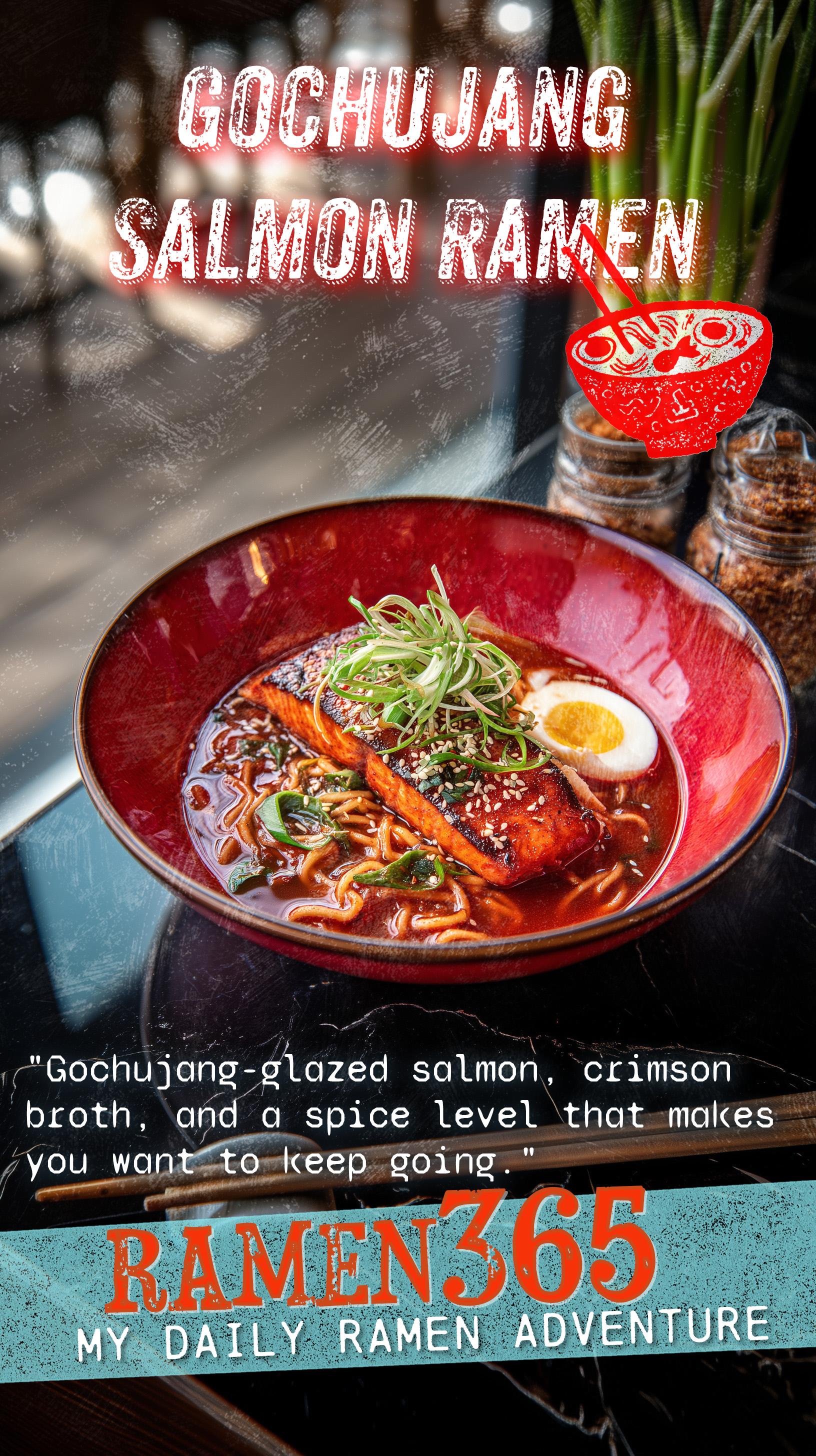
Gochujang is one of those fermented pastes that you keep buying in larger containers, because every time you finish one you realize how many things you want to put it on. It is hot, yes, but in a way that is backed by the deep umami of fermented soybeans, which is different from fresh chili heat and more complex, with a sweetness underneath that most people do not expect. Korean cuisine uses it as the foundation for everything from stews to marinades to dipping sauces, and this recipe uses it for both: as a glaze rubbed directly onto the salmon before grilling, and as a base for the broth underneath. The salmon takes the gochujang particularly well because the fat in the fish carries the fermented spice deep into the flesh rather than letting it sit just on the surface. You get a lacquered, slightly caramelized exterior and a tender, salmon-pink interior, and a broth underneath that is red and assertive and very much meant to be eaten while it is hot.
Gochujang stains red—Salmon flakes against the tide—Seoul in every bite
Let Me Tell You...
Gochujang took me an embarrassingly long time to actually understand, which is to say I used it for years before I understood that the depth underneath the heat was the fermentation talking and not just some kind of sophisticated paprika.
Once I got that it was a fermented product, closer in spirit to miso than to hot sauce, the whole thing clicked.
You are not just adding spice when you use gochujang: you are adding umami and sweetness and a kind of complexity that develops differently depending on whether it gets hit with direct heat or dissolved slowly into liquid.
Wet fish will not caramelize properly and the glaze will steam off instead of lacquering onto the surface.
The glaze does something specific to salmon that it does not do as predictably to other proteins: the natural fat in the fish helps pull the fermented spice deep into the flesh.
You get that dark, slightly sweet lacquer on the outside from the sugars in the gochujang reacting to heat, and then the inside stays salmon-pink and tender, the spice working through the whole piece rather than just sitting on top.
The window for getting this right is narrow.
Medium, with a little translucency still in the thickest part, is where you want to pull it.
Grill or broil on medium-high heat, not maximum heat.
You want slow caramelization, not a scorched exterior with raw interior.
The broth is deliberately lighter than what you might expect from a standard ramen recipe.
You are not making tonkotsu here; you are building something that supports the salmon without competing with it.
A base of doenjang (Korean fermented soybean paste), gochugaru, garlic, and a good anchovy-kelp stock comes together into something brick-red and aromatic, assertive but not heavy.
The salmon rests on top of the noodles and partially submerges as you eat, so the broth slowly absorbs the glaze dripping from the fish, which is a kind of background improvement that keeps going throughout the meal.
Let each person adjust to their own level.
This is not a subtle bowl and it is not trying to be.
It is the kind of thing you make when you want something that looks genuinely impressive but is really about having the right ingredients and not overcooking the fish.
The color alone, that deep, almost glowing red, is enough to make a reasonable person excited about dinner, and the flavor backs it up without apology.
Ingredients
- 1 lb salmon fillet, skin-on, cut into 2 to 3 portions
- 8 ounces dried ramen noodles (2 bricks, seasoning packets discarded)
- 3 tablespoons gochujang paste, divided
- 1 tablespoon doenjang (Korean fermented soybean paste)
- 1 tablespoon gochugaru (Korean red pepper flakes)
- 1 tablespoon low-sodium soy sauce
- 1 tablespoon toasted sesame oil
- 1 tablespoon honey
- 4 garlic cloves, minced, divided
- 1 teaspoon fresh ginger, grated
- 3 cups anchovy-kelp broth (or low-sodium chicken broth)
- 1 tablespoon neutral oil, for cooking
- 3 green onions, thinly sliced, plus more for garnish
- Toasted sesame seeds, for garnish
Preparation
- In a small bowl, combine 2 tablespoons gochujang, soy sauce, honey, sesame oil, and half the minced garlic. Whisk to combine. Pat salmon portions dry with paper towels, then rub the gochujang mixture evenly over all surfaces. Let marinate for 10 minutes while you prepare the broth.
- Heat 1 tablespoon neutral oil in a medium saucepan over medium heat. Add remaining garlic and the ginger and cook, stirring, for 1 minute until fragrant. Add the doenjang and remaining 1 tablespoon gochujang and stir for 1 minute. Add the gochugaru and stir for 30 seconds.
- Pour in the broth and bring to a simmer, stirring to dissolve the paste. Simmer for 10 minutes over medium-low heat to let the flavors develop. Taste and adjust seasoning. Keep warm over low heat.
- Heat a grill pan or cast-iron skillet over medium-high heat until very hot. Add the marinated salmon portions skin-side down and cook for 3 to 4 minutes without moving, until the skin is crispy and the glaze has caramelized. Flip and cook for 2 to 3 minutes more until the fish is just cooked through with a slight translucency remaining at the thickest point. Remove from heat and rest for 2 minutes.
- Bring a large pot of salted water to a boil. Cook ramen noodles for 2 to 3 minutes until just tender. Drain and divide evenly between 2 to 3 bowls.
- Ladle hot broth over the noodles in each bowl. Place a portion of salmon on top of the noodles. Garnish with sliced green onions, toasted sesame seeds, and any optional toppings. Serve immediately while the salmon is still hot.